.png)
Sorry, Not Sorry — The New Trend Taking Over Brand Marketing
Updated: Nov 7, 2025
There’s a new wave of creativity sweeping through social media — and this time, brands aren’t promoting their products, they’re apologizing for them. Not for controversies or complaints, but for being just too irresistible.
Across feeds, brands are posting mock “Official Apology Statements” — formal-looking press releases that say sorry for causing obsession. From perfumes that “draw too much attention” to chips that fans “can’t stop eating,” these witty faux apologies are proving that in 2025, humour — not hype — is the new marketing superpower.
The Trend That Started the Buzz
At first glance, these apology campaigns look completely serious — corporate letterheads, black-and-white designs, and that classic PR tone that screams “we messed up.” Then comes the twist:
The result? Instant attention.
In a meme-driven world where audiences scroll through ads in seconds, these ironic apologies stand out. They’re smart, self-aware, and irresistibly shareable — a wink to the internet’s love for irony and authenticity.
Volkswagen’s Emotional ‘Apology’ for Being Too Iconic
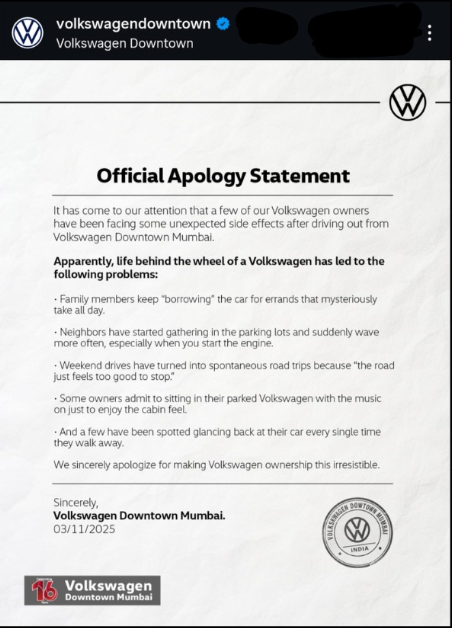
Volkswagen Downtown Mumbai’s tongue-in-cheek “apology” on Instagram has taken the internet for a spin. What seemed like a formal apology turned out to be a cheeky marketing stunt — and it’s divided the audience.
The post humorously “apologized” to Volkswagen owners for the “side effects” of driving their cars — from family members borrowing them too often to drivers taking unnecessary road trips just for the joy of it. While many users praised the wit, others called it tone-deaf, pointing out ongoing service and delivery complaints.
Keventers’ Cheeky Confession
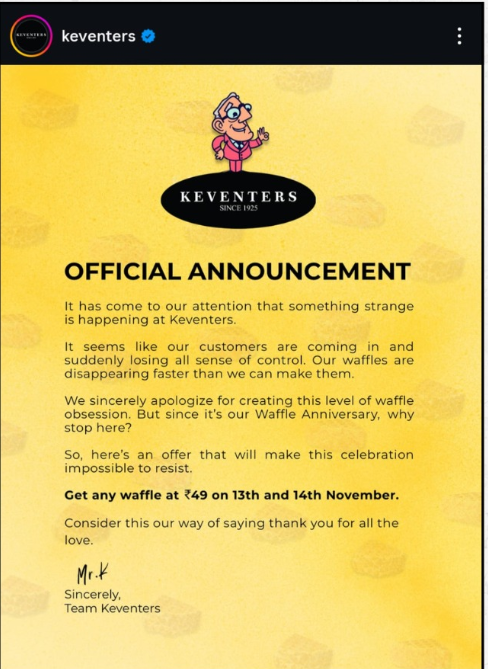
Keventers, the iconic milkshake brand, jumped onto the “official apology” trend with a post that read:
The creative mimicked a formal brand statement but was packed with wit and self-awareness. It quickly went viral, with fans reposting it alongside their favourite shakes.
Why it hit the sweet spot:
It leaned perfectly into Keventers’ playful personality.
It turned simple indulgence into a shared inside joke.
It made people feel part of the brand’s humour — not just its marketing.
Why This Works (and Why It’s Genius)
The brilliance of the “apology campaign” is that it flips the script. Instead of defending a flaw, brands dramatize their strengths. They pretend to be guilty of being too loved, too tempting, or too perfect.
It’s self-aware, not self-promotional. It’s human, not corporate. And it invites participation — fans now create their own parody “apologies” for brands they adore.
In short, it’s not advertising. It’s a conversation.
But Not All Apologies Are Equal
For this trend to work, timing and tone are everything. A brand must already have goodwill; otherwise, a “cute” apology can feel tone-deaf. You can’t joke about being irresistible if customers are genuinely frustrated. Authenticity is the fine line between clever and cringeworthy.
The Final Take
In a digital world drowning in sales pitches, the smartest brands aren’t shouting louder — they’re whispering “sorry” with a smile. The “official apology” trend shows that the future of marketing belongs to brands that can laugh at themselves, embrace their quirks, and speak the language of the internet generation.
Because sometimes, the best way to win hearts… is to pretend you’re sorry for having them in the first place.



Comments