.png)
From Kumartuli to Your Pandal: The Journey of a Durga Idol

Before Maa Durga lights up a pandal, she begins as clay, straw, and countless hours of an artisan’s devotion.
In the narrow lanes of Kumartuli, Kolkata, the arrival of Durga Puja begins months before the first dhak beats echo through the streets. Here, generations of idol-makers transform humble materials into the Goddess millions eagerly await every year. But behind every magnificent idol lies a journey of craftsmanship, patience, and tradition.
From Straw to the Goddess
The process begins with a bamboo framework, carefully shaped and covered with straw to create the idol’s structure. Layers of clay are then applied, gradually forming Maa Durga’s face, hands, and divine posture, along with her children, lion, and Mahishasura.
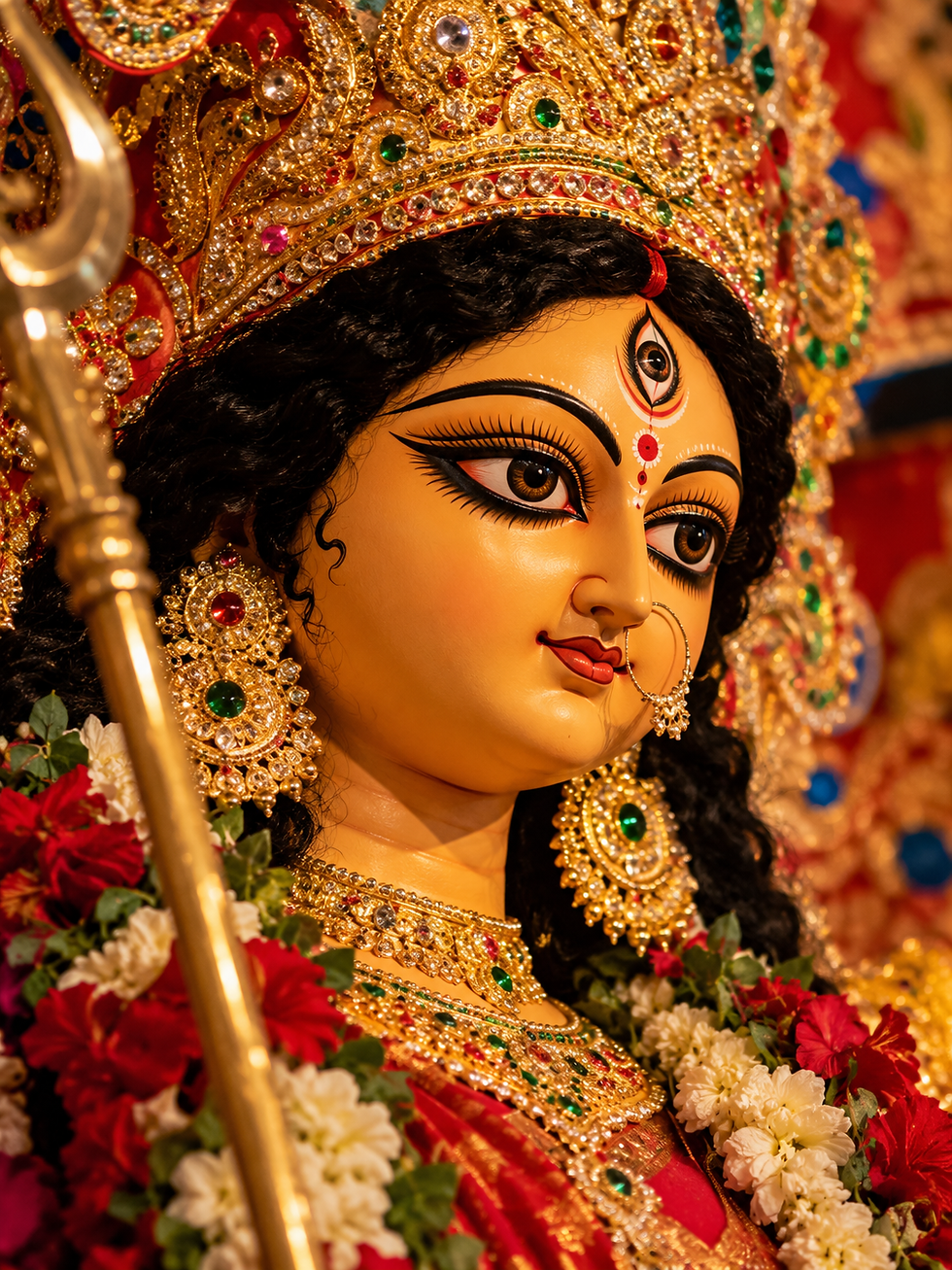
The work demands more than technical skill. Every expression, ornament, and detail contributes to the personality of the Goddess. Once the clay dries, the artisans paint the figures and add crowns, jewellery, traditional attire, and weapons, bringing the entire composition to life.
One of the most significant moments is Chokkhu Daan, the ritual painting of the Goddess’s eyes. Traditionally associated with Mahalaya, this step holds deep cultural and spiritual meaning for devotees, marking an emotional turning point in the idol’s creation.
The Road to the Pandal
Once completed, the idols are carefully transported from workshops to pandals across Kolkata and beyond. There, they become the centrepieces of elaborate celebrations, surrounded by artistic installations, lights, flowers, and thousands of devotees.
Yet, the journey also represents a livelihood for artisan families who depend on seasonal orders and tight deadlines. Their work sustains an entire ecosystem of painters, decorators, material suppliers, and transport workers.
More Than Clay and Craft
When the Goddess is immersed on Dashami, the clay returns to nature. But the artistry remains in collective memory.
Every Durga idol is more than a festival centrepiece. It is a meeting point of heritage, craftsmanship, faith, and community—a reminder that before millions welcome Maa Durga, someone spends months preparing to bring her to life.

Comments