.png)
Understanding the Business Behind PR Packages
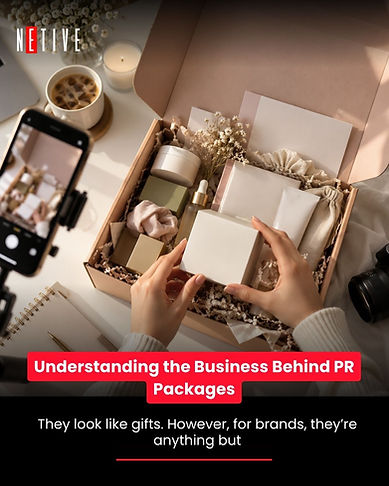
You’ve probably seen them on Instagram: beautifully packed PR packages arriving at a creator’s doorstep, filled with a new product, handwritten notes, and carefully designed extras.
They look like gifts. However, for brands, they’re anything but.
PR packages are a marketing investment designed to turn products into conversations.
When a brand sends 100 creators a launch kit, it isn’t simply giving away 100 products. It is creating multiple opportunities for content, product discovery, reviews, and social proof.
The business model is fairly simple. A brand allocates a budget for the campaign. A PR or influencer agency may handle creator selection, packaging, campaign strategy, logistics, and reporting. The brand then measures the response through reach, engagement, content generated, website visits, sales, or other campaign goals.
But there’s another important layer: content production.
A traditional campaign might require a production team, studio, photographers, actors, and media buying. A PR package can turn creators into a distributed content network. One product can appear in dozens of different videos, stories, photographs, and reviews—each adapted to a creator’s own audience.
And brands don’t always choose the biggest creators.
A skincare brand might send products to beauty creators. A food startup might work with food reviewers. A regional brand might choose smaller creators with strong local communities.
That’s because relevance can matter more than reach.
The package itself is also part of the strategy. Packaging, personalisation, and unboxing experiences are designed to make the product worth sharing. The box becomes part of the content.
Of course, receiving a PR package does not automatically guarantee a post or positive review. Brands have to build genuine creator relationships and choose the right people for the campaign.
Ultimately, the box is not the product being marketed. The box is the beginning of the marketing.


Comments